
Kenya vs Uganda Self-Drive Safari: What Drivers Should Know
Kenya vs Uganda Self-Drive Safari: What Drivers Should Know, Planning a self-drive safari in East Africa sounds simple until you start comparing Kenya vs Uganda for self-drive. Both countries offer exceptional wildlife, spectacular landscapes and the freedom to explore at your own pace, but the driving experience can be quite different.
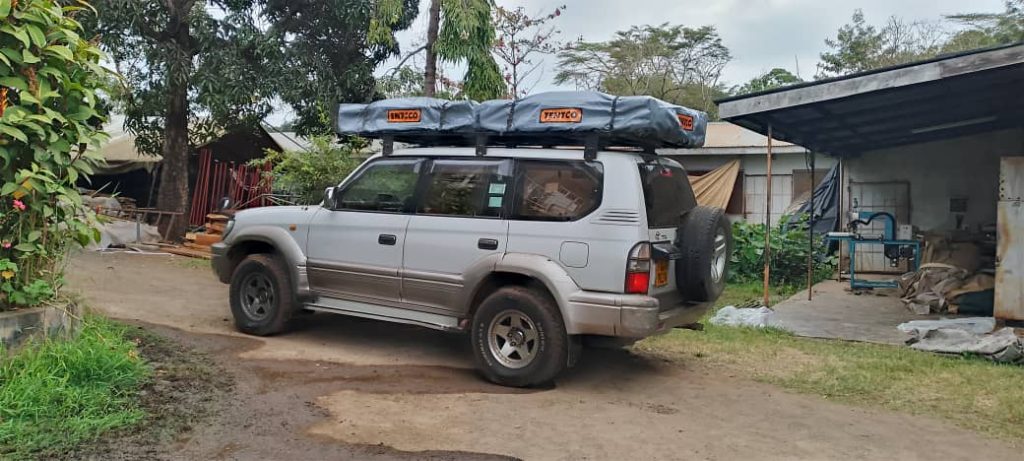 For travelers who want to rent a 4×4 and explore beyond the usual guided safari route, understanding the differences before collecting the keys can make a big difference.
Kenya is well known for destinations such as the Maasai Mara, Amboseli, Tsavo and Lake Nakuru, while Uganda offers a different combination of savannah, rainforest, mountains and primate experiences, including Murchison Falls, Queen Elizabeth, Kidepo Valley, Bwindi and Kibale. So, which country is more suitable for a self-drive safari? Rather than giving a simple answer, let’s look at what drivers should actually expect in each destination.
Kenya vs Uganda Self-Drive: The Main Difference
The biggest difference is not necessarily the wildlife. It is the driving environment. Kenya has an extensive tourism infrastructure around many of its major safari destinations. Several national parks and reserves are accessible by road, and self-driving is established in many areas. Kenya Wildlife Service (KWS), for example, provides specific driving rules for its parks, including speed limits, staying on designated roads and remaining inside vehicles except in designated areas.
Uganda, meanwhile, combines major highways with a large network of unpaved roads, rural tracks and game-drive routes. The experience can therefore feel more adventurous, particularly when traveling between remote parks or entering during rainy conditions. Uganda’s tourism authorities recommend obtaining local advice about journey times and whether four-wheel drive will be required, particularly when traveling long distances or on safari.
For both countries, a proper 4×4 safari vehicle is more than a luxury. It gives you higher ground clearance, better traction and more confidence on rough roads.
Driving in Kenya: What Self-Drive Travelers Should Know
Kenya is an attractive option for a Kenya self-drive safari because several famous wildlife destinations can be incorporated into a road trip. A typical itinerary might connect Nairobi with Lake Naivasha, Lake Nakuru, Maasai Mara, Amboseli and Tsavo. However, distances can be considerable, so drivers should avoid planning every day around long stretches of driving.
Road conditions also change significantly between destinations. The main highways and major connecting roads can be relatively straightforward, while roads inside parks and reserves may include gravel, corrugation, loose stones, mud and deep tracks. During the rainy season, conditions can become particularly challenging. KWS notes that many park roads may require four-wheel drive during the April–June rainy period.
Kenya Safari Park Driving Rules
Do not assume that normal road rules automatically apply inside every safari destination. For example, KWS guidance for Nairobi National Park and Amboseli includes a 40 km/h maximum speed, remaining on established roads and trails, and staying inside the vehicle except in designated areas. Wild animals always have priority. If elephants are crossing the road, lions are resting near your vehicle or buffalo are blocking the track, patience is more important than trying to find a way around them. A self-drive safari is not a race. Slow driving also gives you more time to notice wildlife.
Uganda Self-Drive Safari: What Makes It Different?
A Uganda self-drive safari offers a more varied road-trip experience. You can leave Kampala or Entebbe and gradually move from busy urban roads to countryside, small trading centers, plantations, lakes, mountains and eventually national parks.
Popular self-drive routes include:
- Kampala – Ziwa Rhino Sanctuary – Murchison Falls
- Kampala – Fort Portal – Kibale
- Kampala – Queen Elizabeth National Park
- Queen Elizabeth – Bwindi
- Kampala – Lake Mburo
- Kampala – Kidepo Valley
Uganda drives on the left-hand side of the road, and travelers should be prepared for pedestrians, cyclists, motorcycles and livestock sharing the road. One of the most important things to understand is that travel time is not determined by distance alone. A relatively short distance on a rough park road can take considerably longer than the same distance on a paved highway. That is why a realistic Uganda self-drive itinerary should leave enough time for unexpected road conditions, wildlife stops and mechanical issues.
Which 4×4 Should You Rent for Kenya and Uganda?
Your vehicle can have a major influence on the quality of your trip. For a serious East Africa self-drive safari, look for:
- Genuine 4×4 capability
- High ground clearance
- Reliable suspension
- Good-quality tyres
- At least one usable spare tyre
- Jack and basic recovery equipment
- Adequate luggage space
- Reliable air conditioning
- Strong mechanical support from the rental company
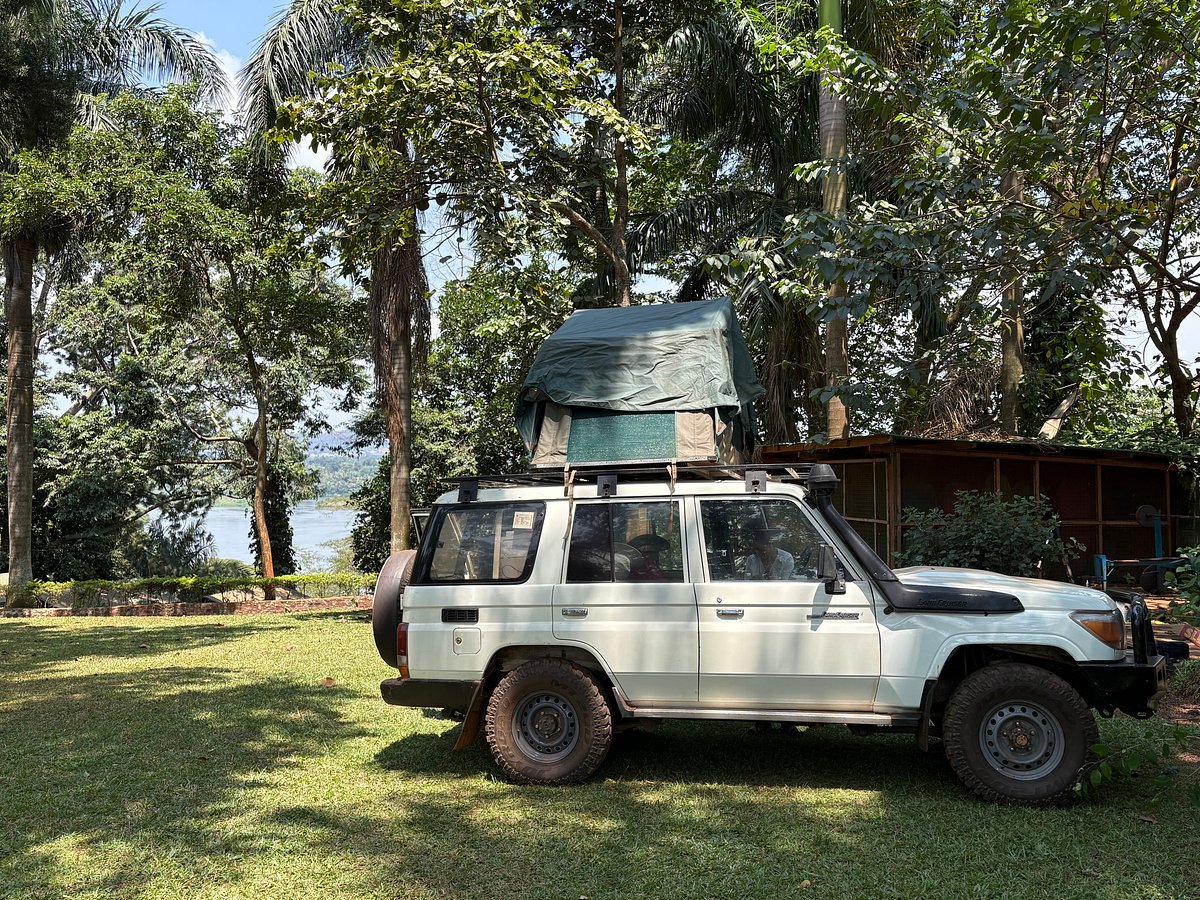
For travelers using a rooftop tent 4×4 rental in East Africa, the vehicle also needs to be suitable for carrying camping equipment and luggage. A Toyota Land Cruiser is commonly chosen for longer East African road trips because of its combination of space, ground clearance and suitability for rough terrain.
At 4×4 Uganda Car Rentals, travelers planning Uganda, Kenya and Tanzania together can also discuss the vehicle requirements for the entire route rather than choosing a vehicle based only on the first country.
Kenya or Uganda for a Rooftop Tent Safari?
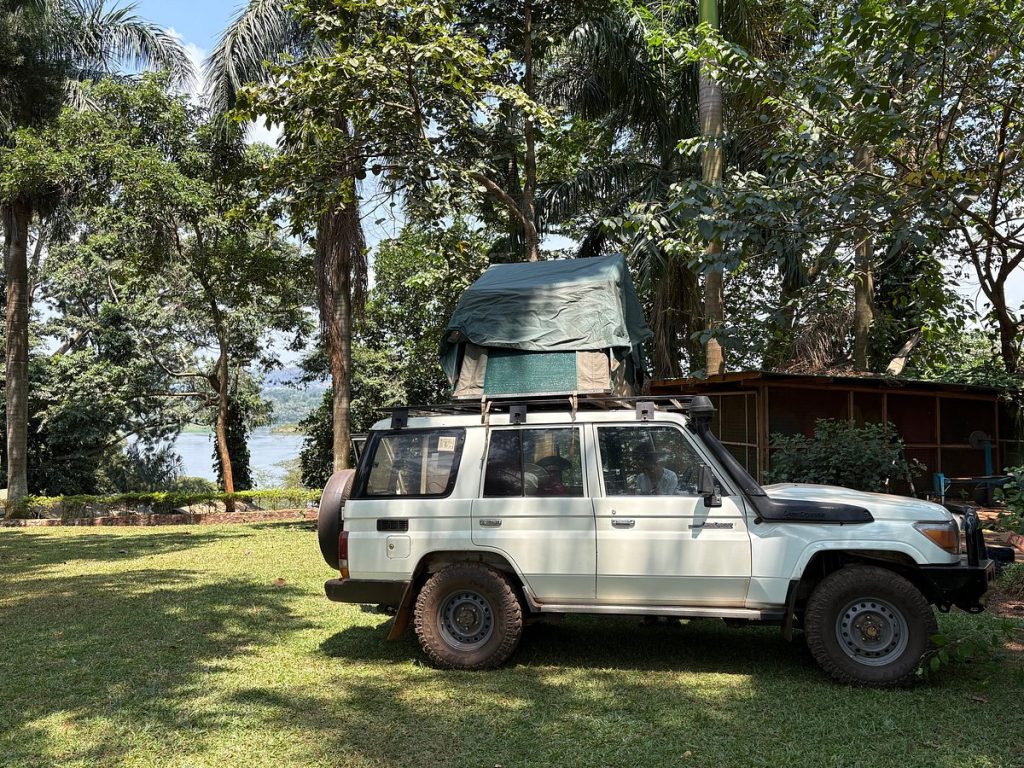 A rooftop tent adds another dimension to a self-drive adventure. Instead of booking a lodge every night, travelers can combine campsites, lodges and other accommodation options depending on their itinerary.
This is particularly useful for travelers searching for:
Kenya rooftop tent car rental, Uganda rooftop tent car rental, East Africa camping safari or 4×4 rental with rooftop tent in East Africa.
However, camping rules differ between parks, reserves and private campsites. Always confirm where overnight camping is permitted before arriving. Do not simply assume that you can park and camp anywhere because you have a rooftop tent.
Wildlife: Kenya vs Uganda
Kenya is internationally famous for the Maasai Mara and Great Migration, while Uganda offers an unusually broad combination of savannah wildlife and primate experiences.
In Kenya, self-drive travelers may plan around destinations such as Maasai Mara, Amboseli, Tsavo and Lake Nakuru. In Uganda, a road trip can combine Murchison Falls wildlife, Queen Elizabeth’s savannah, Kibale’s chimpanzees and Bwindi’s mountain gorilla trekking.
Uganda’s self-drive experience is therefore not only about traditional game drives. It can become a broader road trip combining wildlife, primates, forests, crater lakes, mountains and local communities.
Fuel Planning Is Extremely Important
One of the easiest mistakes for first-time self-drivers is treating fuel stops casually. Fuel is available in major towns and along many important routes, but remote safari areas require more careful planning. Uganda’s tourism information specifically recommends carrying spare fuel when driving long distances or going on safari.
Before leaving a major town, check:
- Your fuel level
- The distance to the next reliable fuel station
- Your planned detours
- Whether you will spend several days inside a park
- Whether your rental vehicle has an additional fuel tank or jerry can
The same principle applies in Kenya: do not wait until the fuel warning light comes on before thinking about your next fuel stop.
Driving Across Kenya and Uganda
Some adventurous travelers want to combine both countries in one itinerary. A Kenya-Uganda self-drive safari can be an excellent road-trip concept, but cross-border vehicle documentation and insurance requirements must be arranged in advance.
Before collecting your vehicle, ask your rental company about:
- Cross-border authorization
- Vehicle registration documents
- Insurance requirements
- East African motor insurance arrangements
- Border procedures
- Park-entry requirements
- Additional cross-border fees
- Emergency assistance
Never assume that because you can cross the border as a passenger, your rental vehicle automatically has permission to cross.
Navigation and Mobile Connectivity
Do not rely entirely on your phone. Download offline maps before leaving the city and consider carrying a physical map or a second navigation option.
Mobile coverage can vary considerably in rural and protected areas. A good self-driver should know the general direction of the next town, fuel station, park gate and accommodation before starting the day’s journey.
If you are renting a 4×4 in Uganda for self-drive, ask your rental company for route advice based on the current condition of the roads.
Driving Safely Around Wildlife
Wildlife roads require a completely different mindset from normal highways.Keep your speed low, maintain a safe distance and never try to force your way through animals.
KWS guidance instructs visitors to remain in vehicles except at designated locations, stay on established roads and respect wildlife’s right of way. Uganda’s park guidance similarly emphasizes staying on designated routes and not getting out of vehicles except at appropriate locations.
Remember that animals are unpredictable. Even a familiar-looking elephant or buffalo remains a wild animal.
Kenya vs Uganda Self-Drive: Plan for the Driver, Not Just the Destination
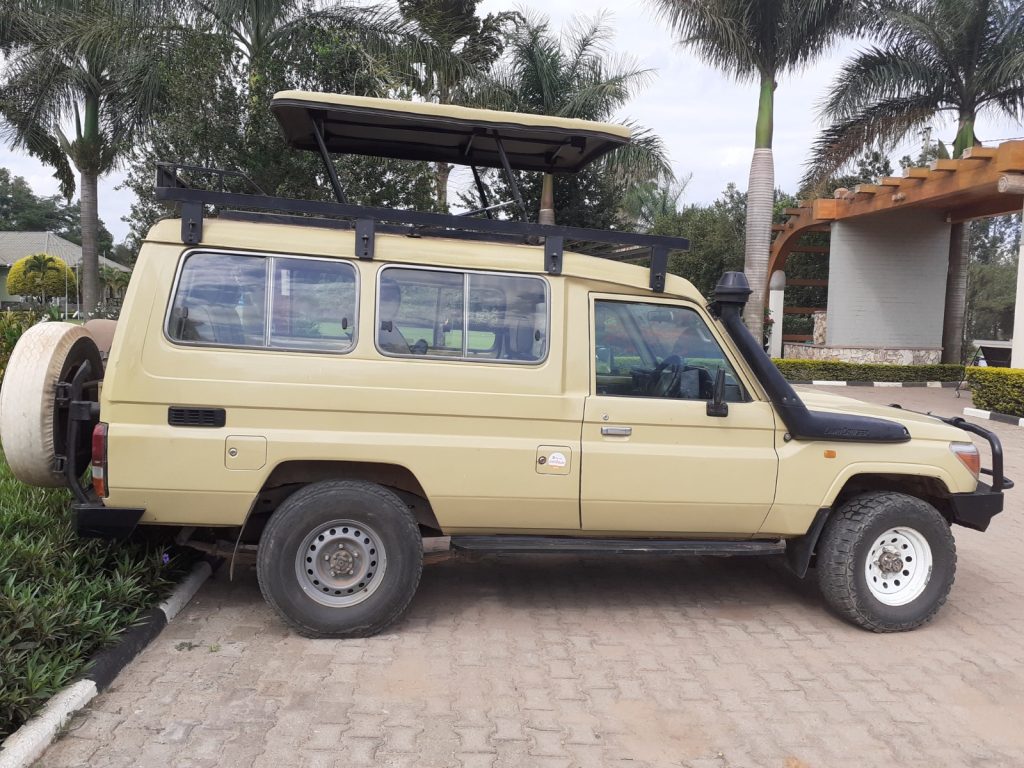
The most enjoyable self-drive safaris are not necessarily those with the most destinations. They are the ones where the driver has enough time to enjoy the journey. Instead of trying to drive from Nairobi to a distant park in one exhausting day, or rushing from one Ugandan national park to another, allow time for rest, navigation, photography, fuel stops and changing road conditions.
A well-planned itinerary should also leave some flexibility.
Final Thoughts
Both Kenya and Uganda offer rewarding self-drive safari experiences, but they require preparation and a suitable vehicle.
Kenya can work well for travelers interested in famous savannah destinations such as Maasai Mara and Amboseli, while Uganda offers a broader combination of wildlife, primates, forests and scenic road trips. For travelers planning a multi-country East Africa self-drive safari, the most important questions are not simply “Kenya or Uganda?” Instead, ask:
What parks are we visiting? What are the road conditions? What vehicle do we need? Where can we refuel? Where can we camp? What border documents are required? And how much driving should we realistically do each day?
At 4×4 Uganda Car Rentals, we help travelers choose suitable 4×4 vehicles for Uganda and wider East African road trips, including rooftop-tent-equipped vehicles for travelers who want the freedom of a self-drive camping adventure.
Plan the route carefully, choose the right vehicle, respect wildlife and leave enough time to enjoy the journey. That is what turns a self-drive safari from simply getting from one destination to another into a genuine East African adventure